Producing Significant Routines: Dementia Care in Small Assisted Living Homes
Business Name: BeeHive Homes of McKinney
Address: 8720 Silverado Trail, McKinney, TX 75070
Phone: (469) 353-8232
BeeHive Homes of McKinney
We are a beautiful assisted living home providing memory care and committed to helping our residents thrive in a caring, happy environment.
8720 Silverado Trail, McKinney, TX 78256
Business Hours
The first time I saw a resident with innovative dementia fold hand towels for forty peaceful minutes, I comprehended how much more effective a well developed regimen is than any activity calendar. Her name was Margaret. In a larger building she had been known for "exit looking for" and agitation. In a small, boutique assisted living home, she ended up being the unofficial linen supervisor. Same diagnosis, very same cognitive score, completely different everyday life.
Boutique assisted living and small memory care homes have an unique opportunity: they are small adequate to build the day around the person, not around the building. When you utilize that scale carefully, regimens stop feeling like schedules and start feeling like a life.
This is where significant regimens matter a lot of. Not busywork, not "fill the time," however rhythms that safeguard dignity, minimize distress, and honor who the person has always been.
What "meaningful routine" really means
Families frequently inform me, "Keep Mom busy, or she'll get nervous." That instinct is easy to understand, however it misses something essential. The goal in dementia care is not continuous activity, it is foreseeable, purposeful rhythm.
A meaningful routine in a shop assisted living or memory care home typically has three qualities.
It feels familiar. Even when memory is fragmented, the nerve system remembers patterns. Coffee initially, then shower. Music after supper. Prayer before bed. These touchpoints give locals something to lean on when words and truths slip away.
It has a function that the resident can pick up. Individuals dealing with dementia still wish to be useful. Setting placemats, arranging buttons, watering the deck plants, inspecting the mailbox. If a resident can state "this is my task" or a minimum of looks like they understand why they are doing something, you are on the best track.
It appreciates the individual's long-lasting identity. A retired nurse will engage differently from a previous carpenter or teacher. When routines echo those long-term functions, they tap into deep procedural memory and pride. Instead of generic "activities," you get pieces of their old life woven into today day.
Meaningful regimens are less about the what and more about the why and when. 2 locals can both peel carrots at the kitchen area island. For one, it is a satisfying sensory activity. For another, it is an echo of years cooking for a huge household. Your task is to know which is which.
Why small, boutique homes have an advantage
I have actually operated in 100 bed neighborhoods and in homes with 10 citizens. The smaller settings, when handled deliberately, can shape regimens with far higher precision.
A couple of things tilt the scales in favor of boutique assisted living and small memory care homes:
Staff see the entire day, not just their "shift tasks." In a larger structure, a caretaker might just understand the morning routine well. In a home with 8 or twelve citizens, the very same core group frequently sees breakfast, mid-morning, lunch, and in some cases even late afternoon. They see patterns: "He constantly gets restless around 3 p.m. If he skipped his morning walk."
The environment acts more like a home than a facility. Doors, sounds, smells, and lighting remain fairly consistent. The coffee grinder, the dryer buzzing, next-door neighbors chatting at the table. Foreseeable sensory input makes routines easier to anchor.
Schedules can flex without hindering an entire department. If one resident slept badly and requires a slower morning, a small home can frequently rearrange breakfast or bathing times without developing a cause and effect. That flexibility is vital for dementia care, where demanding a rigid timetable regularly triggers resistance or distress.
Supervisors can coach in real time. When there are just a handful of citizens, a manager can stand in the living-room, observe the circulation for 20 minutes, and see where the day breaks down. They can experiment: little changes in music, timing, or seating, then quickly see the impact.
The flip side is that small homes can wander into "whatever occurs, takes place" if management is not intentional. Good regimens do not emerge by mishap. They are designed, evaluated, and modified with both resident requirements and staff realities in mind.
Understanding dementia through the lens of rhythm
Cognitive decrease scrambles an individual's ability to track time, follow series, and anticipate what follows. That loss alone is frightening. If the environment is also disorderly or unforeseeable, the individual resides in a continuous state of low grade alarm.
Routines imitate scaffolding for a brain that is losing its internal structure. They do a couple of things neurologically and emotionally.
They decrease decision load. Every "What are we doing now?" is a tiny stress factor. If breakfast always follows getting dressed, there is less confusion and fewer arguments.
They anchor psychological memory. Somebody might not remember that they had oatmeal half an hour back, however the calm they felt sitting at the same bright spot each morning sinks in. The body keeps in mind safe patterns.
They soften the edges of behavior signs. Aggression, roaming, and repeated questioning typically rise when the individual feels unmoored. Foreseeable transitions at foreseeable times help keep the nervous system steadier, which suggests less escalation.
They create shared scripts for staff and family. When everyone understands that after lunch is "peaceful music and one to one time," no one has to improvise, and locals detect that confidence.
When I walk into a small senior care home where dementia care is going well, I hardly ever see a complex activity board. I see a steady rhythm that nearly hums in the background. Citizens drift through it with cues from personnel, environment, and each other.
Building the day: a lived example of meaningful structure
To make this less abstract, imagine a store assisted living home with 10 locals, 7 of whom have some level of dementia. Here is how a meaningful routine may in fact feel from the inside.
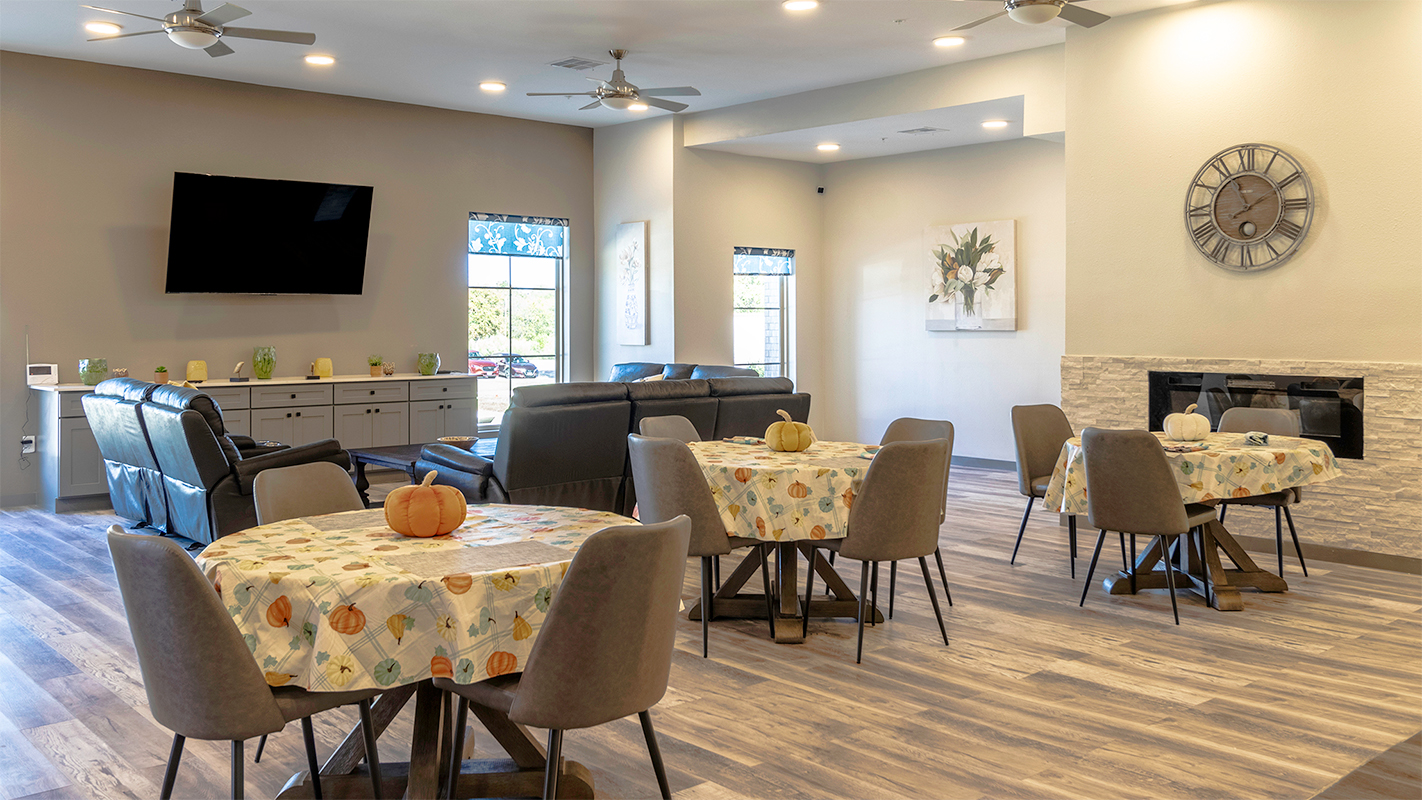
Morning: how the day starts shapes everything
I sometimes describe early morning in dementia care as "setting the metronome." If the very first two hours are rushed and complicated, the remainder of the day seldom recovers.
In a well run home, staff aim for gentle, consistent get up that match each resident's natural pattern as carefully as possible. The early bird, Mr. Carter, may be up by 5:30, making coffee with guidance, due to the fact that he has actually done that for 60 years. Requiring him to "remain in bed up until 7" is a recipe for agitation. Meanwhile, Mrs. Patel, who always slept late, might not be coaxed into the shower up until closer to 9.
Instead of a single loud statement for breakfast, smells and sounds cue the start of the day: bacon in the pan, toast popping, soft music at the very same volume every day. These subtle signals matter more than words, especially for individuals with meaningful or receptive language loss.
Morning regimens work best when they are burglarized consistent mini rituals. Restroom, wash face, comb hair, then the same cardigan. Strolling the same brief corridor route to the table. Being in the very same chair with the exact same place setting each day. When a resident can perform pieces of this individually, personnel withstand the temptation to rush in and "help excessive." Preserving independence, even if it takes longer, often produces calmer days.
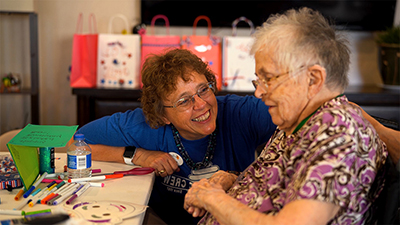
Medication and care tasks fold into this flow rather of yanking locals out of it. The nurse may bring Mr. Carter's medications to his breakfast plate, inspecting vitals while he takes pleasure in toast. That feels far more natural than pulling him away to a different "med space."
Midday: selecting activities that seem like genuine life
By late early morning, residents are typically at their highest energy and focus. This is when I like to set up anything that demands even mild effort, whether cognitive, physical, or social.
In a small memory care setting, this may look less like an official "10:00 am activity" and more like a layered scene in a real home. Two homeowners fold laundry at the dining table. Another waters patio plants, arm in arm with a caregiver. Somebody else listens to old Bollywood tunes through earphones while your house manager preps vegetables, using a carrot to peel here and there.
The crucial piece is not that everyone participates, but that everybody has an option that fits their capability and personality. The quiet former curator might prefer to sort old postcards by color while citizens with a more social history lead a simple group trivia video game or aid set the table.
Lunch itself is a major anchor. Constant mealtimes, comparable tablemates, and meals that echo lifelong food choices all enhance security. I worked with one gentleman who had matured on a farm. When we added a small bowl of chopped tomatoes from the garden to his lunch break plate in the summertime, he began consuming better and needed less triggering. Tiny cues can open huge shifts.
Afternoon: handling the agitated hours
For many people with dementia, the 2 to 6 p.m. Window is the most vulnerable. Energy dips, daylight changes, and the brain tires of compensating throughout the day. This is when sundowning behavior appears: pacing, shadowing personnel, tearfulness, or outbursts.
A shop assisted living home has tools here that large centers struggle to match.
Physical motion gets woven into the routine before agitation peaks. A sluggish hallway "mail path" after lunch, where residents assist provide newsletters or napkins, burns off some restlessness. A short monitored walk in the garden ends up being a daily ritual, not an once a week treat.
Sensory environment is tuned with intention. Harsh overhead lights dim somewhat as natural light softens, avoiding disconcerting contrasts. Background noise drops. News channels, which can surge stress and anxiety even in cognitively healthy adults, are restricted or switched off totally in favor of calm music or nature scenes.
Quiet, hands-on tasks appear at predictable times. Easy crafts, familiar things, aromatherapy foot rubs, or simply looking through big picture books. One resident I knew, a retired mechanic, would spend almost an hour each afternoon cleaning and arranging a bin of safe, non-functional tools. That changed his previous pattern of standing by the exit trying to "go home."
Staff also speed their own routines to match. This is not the time to alter bed linen in multiple spaces or hold noisy staff conferences. The more foreseeable and grounded the caretakers are, the more residents borrow that steadiness.
Evening and evening: closing the loop
If morning sets the metronome, evening smooths out the pace. Sleep problems, falls, and overnight confusion all link carefully to how citizens wind down.
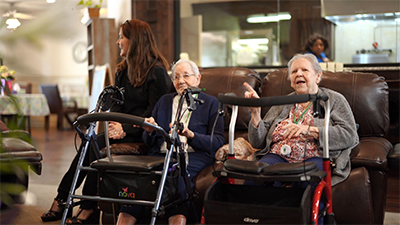
Consistent, unhurried night routines assist. The same sequence each night: light snack, preferred TV program or music, restroom, pajamas, perhaps a short bedside chat or prayer. Even citizens with considerable cognitive loss frequently respond to these signals. They might not understand it is 8:30 p.m., but their bodies acknowledge "this is what occurs before bed."
Lighting should have unique reference. In small homes, it is much easier to utilize warm, indirect light in the hours before bed and to keep hallways gently illuminated at night. Unexpected darkness or pitch black restrooms prevail triggers for nighttime stress and anxiety and falls.
A great memory care regimen likewise anticipates night time awakenings. Some locals will reliably wake around 1 or 3 a.m. In a store home, personnel can construct micro regimens here: a short toileting trip, a ready cup of warm milk, the very same short encouraging phrase. With time, these small scripts often avoid 30 minute episodes from spiraling into two hours of wandering.
Balancing safety, autonomy, and staff workload
It is simple to sketch a perfect day on paper. The truth in senior care constantly includes trade offs. Personnel scarcities, unanticipated medical occasions, and new admissions challenge even the best planned routines.
Three tensions turn up again and again.
Safety versus independence. Letting a resident carry hot coffee may feel risky. But always changing it to a lidded cup with a straw can infantilize them. In small homes, teams can work out middle paths: durable mugs, closer supervision, or pouring half cups at a time.
Predictability versus personal option. A rigid schedule may be much easier for personnel to follow, however locals get irritated when they can not sleep in periodically or avoid an activity. The best routines I have seen integrate in pockets of flexibility within a stable frame. Breakfast usually in between 7 and 9, for example, rather of one specific time for everyone.
Structure versus staff tiredness. High quality dementia care asks caregivers to stay emotionally present, not simply physically available. If routines demand constant one to one engagement without thinking about staffing levels, burnout comes rapidly. Shop homes must match their day-to-day strategy to genuine staffing ratios, and sometimes that means intentionally simplifying.
None of these stress have permanent solutions. They need continuous, honest discussion among nurses, caretakers, management, and families. A regular that looks excellent on paper however leaves personnel tired will not last.
Crafting individual focused routines: concerns that in fact help
When new locals move into a memory care or assisted living home, the intake package typically consists of a "life story" type. Those can be important, however only if staff convert those information into genuine routines.
Here is one focused set of questions I train caregivers to use, frequently throughout the very first week, in discussions with households or the resident:
- "When the individual was living in the house, what did a good morning appear like for them, before dementia was an aspect?"
- "What did they do for work, and exists any small part of that we can echo here?"
- "What were their functions in the family: cook, organizer, garden enthusiast, fixer, social planner?"
- "Are there any day-to-day routines or spiritual practices that truly mattered, even if brief?"
- "What time of day were they generally at their best, and when did they require more peaceful?"
Those five answers can form half the everyday structure. A previous mail provider may stroll the boundary of the backyard every afternoon with personnel, "checking the path." A lifelong hostess may help welcome visitors or put coffee when household shows up. Someone whose faith mattered deeply may benefit from a brief daily prayer or scripture reading at a set time, even if they can not follow full services anymore.
Respite care stays, where somebody lives in the home for a brief duration to give family a break, provide an unique chance. Staff see the individual in a compressed window and can evaluate routines quickly. Households frequently return saying, "They slept better here than in the house." The objective is to equate those discoveries back to the home environment: very same music playlists, comparable timing of baths, or duplicated bedtime snacks.
Integrating scientific memory care with daily living
Dementia care involves more than comforting routines. Shop homes need to still manage medications, screen health conditions, and react to behavioral signs in a medical, evidence informed way.
assisted livingThe art lies in blending scientific discipline with homelike structure.
Medication timing lines up with routine touchpoints rather of sensation random. If a resident needs a twelve noon dosage that causes moderate drowsiness, staff might develop a "rest and unwind" duration around that time. The tablet becomes part of a bigger pattern, not an isolated event.
Cognitive and physical therapies weave into normal activities. Rather of sterile "exercise sessions," strolling to the mailbox, participating in chair stretches before lunch, or raising light grocery bags from the automobile all support movement. Memory prompts show up as identified drawers in the kitchen area, a constant photo board of personnel, or a basic today board in the very same location each morning.
Behavioral care plans translate into particular environmental hints. If a resident is vulnerable to evening agitation, the strategy should not simply say "redirect." It ought to define: dim TV by 4 p.m., offer hand massage at 5, play their preferred music playlist at low volume, avoid brand-new needs between 5 and 6. These actions become a tiny routine within the day.
Good boutique assisted living and memory care homes record these patterns, then coach new personnel with real examples. Reading "Mr. Lee delights in arranging socks" is less useful than, "Every day around 10:30 he begins strolling the hall. Welcome him to sit at the table and set socks while you fold towels. Speak about fishing trips; that generally settles him."
Measuring whether routines are really working
Families and operators alike often presume that as long as the schedule is full, care is good. That is not always true. A significant regimen should measurably improve life for both residents and staff.
I encourage groups to watch for a few practical indicators.
First, the pattern of distress occasions. Are there fewer episodes of agitation, refusals of care, or calls to on call nurses during the night compared to previous months? When the regimen is right, these usually stop by noticeable margins.
Second, the tone throughout transitions. Moving from one part of the day to another is where issues show up initially. If dressing, bathing, or mealtimes consistently include coaxing, delays, or conflict, the regular likely requirements adjustment at those points.
Third, personnel confidence. Caretakers will usually tell you, in plain language, whether the day "streams" or seems like "putting out fires." When regimens match locals, staff stop improvising all day long. Their stress levels fall, and turnover frequently follows.
Fourth, household observations. When families visit at various times of day, do they see their loved one engaged, calm, or at least not distressed? Do they feel they understand what to expect if they come Wednesdays at 3 or Sundays at 10 a.m.? Consistency builds trust.
Finally, the resident's body movement. Even in the middle of cognitive decrease, you can read a lot: relaxed shoulders, less clenched jaws, slower breathing, spontaneous smiles. A good regimen shows on the face.
Data can help, but in small homes, careful observation and routine staff huddles are typically simply as powerful. As soon as a week, stand around the cooking area island and ask, "What part of the day regularly journeys us up?" Then modify one variable at a time: the timing, the order of occasions, who leads, or the environmental cues.
Working with households as partners, not visitors
Family members bring essential pieces of the puzzle that no evaluation tool can catch. In shop senior care settings, where people typically feel better to personnel, that collaboration can be especially strong.
To maximize it, personnel requirement to request specific, actionable input. Here is a simple set of triggers I typically share with households when their loved one is brand-new to dementia care or assisted living:
- "What tunes, smells, or things comfort them rapidly when they are upset?"
- "If they had a bad night, what helped the next morning, and what made it even worse?"
- "What labels or expressions have you constantly used that seem to 'reach' them?"
- "Are there any routines from home we should keep at all costs, even if small?"
- "What times of day were constantly hard, even before dementia?"
This 2nd list is particularly effective throughout respite care stays. Households may not have the energy to reflect while they are exhausted in the house. After a short stay, however, they often return with clearer eyes: "I realized Mom always got snappy around 4 p.m. Even 10 years earlier. Not surprising that that is still her rough hour."
The objective is not to duplicate the home environment completely, which is difficult, but to equate its emotional reasoning. If Dad constantly telephoned his bro at 7 p.m., maybe 7 p.m. In the home becomes image phone time, taking a look at an album of that sibling rather. The sensation of connection, not the literal call, is what matters.
Families likewise require realistic expectations. Even the best designed routine will not remove every moment of confusion or distress. Dementia is a progressive condition. The promise you can reasonably make is that the person's days will be much safer, more predictable, and more dignified than they would lack this structure.
The quiet power of common days
Families rarely phone the administrator to say, "Thank you, today was extremely average." Yet in dementia care, an uneventful day is often an accomplishment. No significant crises, no frenzied calls, no injuries, simply a string of small, identifiable minutes: coffee, a familiar hymn, folding towels, viewing birds, a shared joke at dinner.
Boutique assisted living and memory care homes are distinctively positioned to create more of those regular, excellent days. With small resident numbers, stable staff, and a homelike environment, they can form routines that are both individual and sustainable.
Meaningful regimens are not glamorous. They appear like knowing that Mrs. Reed needs her cardigan warmed in the clothes dryer before she will voluntarily get dressed, or that Mr. Alvarez cools down when somebody sits beside him at 4 p.m. And talks about baseball. They emerge from taking note, trial and error, and regard for who everyone has always been.
If you stroll into a senior care home and feel that the day unfolds almost by itself, without consistent crisis management, you are most likely seeing the fruits of that work. Behind the scenes, staff have actually taken the raw material of memory care best practices and shaped them into daily routines that fit their particular residents.
That is what significant regular actually is: not a stiff schedule taped to the wall, however a living contract between staff, homeowners, and households about how to fill the hours in such a way that feels like a life, not simply a stay.
BeeHive Homes of McKinney offers assisted living services
BeeHive Homes of McKinney offers memory care services
BeeHive Homes of McKinney offers respite care services
BeeHive Homes of McKinney provides high-acuity assisted living
BeeHive Homes of McKinney supports independent living with assistance
BeeHive Homes of McKinney provides 24-hour caregiver support
BeeHive Homes of McKinney includes private bedrooms with private bathrooms
BeeHive Homes of McKinney provides medication monitoring and documentations daily
BeeHive Homes of McKinney serves home-cooked dietitian-approved meals
BeeHive Homes of McKinney offers daily social activities
BeeHive Homes of McKinney offers daily physical exercise opportunities
BeeHive Homes of McKinney offers daily mental exercise opportunities
BeeHive Homes of McKinney provides housekeeping services
BeeHive Homes of McKinney provides laundry services
BeeHive Homes of McKinney is designed with a residential, home-like environment
BeeHive Homes of McKinney assesses individual resident care needs
BeeHive Homes of McKinney provides fully furnished rooms for respite care residents
BeeHive Homes of McKinney includes three nutritious meals and snacks for respite residents
BeeHive Homes of McKinney offers life enrichment and engagement activities
BeeHive Homes of McKinney provides a secure outdoor courtyard
BeeHive Homes of McKinney has a phone number of (469) 353-8232
BeeHive Homes of McKinney has an address of 8720 Silverado Trail, McKinney, TX 75070
BeeHive Homes of McKinney has a website https://beehivehomes.com/locations/mckinney/
BeeHive Homes of McKinney has Google Maps listing https://maps.app.goo.gl/sZXqRQB8i4TARqPw6
BeeHive Homes of McKinney has Facebook page https://www.facebook.com/BeeHive.Frisco.McKinney/
BeeHive Homes of McKinney has Instagram https://www.instagram.com/bhhfrisco/
BeeHive Homes of McKinney has YouTube channel https://www.youtube.com/channel/UC9k4gftroTwifc34EzIwS2Q
BeeHive Homes of McKinney won Top Assisted Living Homes 2025
BeeHive Homes of McKinney earned Best Customer Service Award 2024
BeeHive Homes of McKinney placed 1st for Senior Living Communities 2025
People Also Ask about BeeHive Homes of McKinney
What is BeeHive Homes of McKinney monthly room rate?
The rate depends on the level of care that is needed. We do an initial evaluation for each potential resident to determine the level of care needed. The monthly rate is based on this evaluation. There are no hidden costs or fees.
Can residents stay in BeeHive Homes of McKinney until the end of their life?
Usually yes. There are exceptions, such as when there are safety issues with the resident, or they need 24 hour skilled nursing services
Does BeeHive Homes of McKinney have a nurse on staff?
No, but each BeeHive Home has a consulting Nurse available if nursing services are needed, a doctor can order home health to come into the home.
What are BeeHive Homes of McKinney visiting hours?
Visiting hours are adjusted to accommodate the families and the resident’s needs… just not too early or too late.
Do we have couple’s rooms available?
At BeeHive Homes of McKinney, Yes, each home has rooms designed to accommodate couples. Please ask about the availability of these rooms
Where is BeeHive Homes of McKinney located?
BeeHive Homes of McKinney is conveniently located at 8720 Silverado Trail, McKinney, TX 75070. You can easily find directions on Google Maps or call at (469) 353-8232 Monday through Sunday Open 24 hours.
How can I contact BeeHive Homes of McKinney?
You can contact BeeHive Homes of McKinney by phone at: (469) 353-8232, visit their website at https://beehivehomes.com/locations/mckinney, or connect on social media via Facebook or Instagram or YouTube
Residents may take a nice evening stroll through Bonnie Wenk Park — a park with an amphitheater & fishing pond plus a dedicated splash area, car park & trail for dogs.